Kitchen service
Backsplash and tile
Set-out drawings, cut planning, grout joints and edge details that land where they should.
Overview
What this work actually is
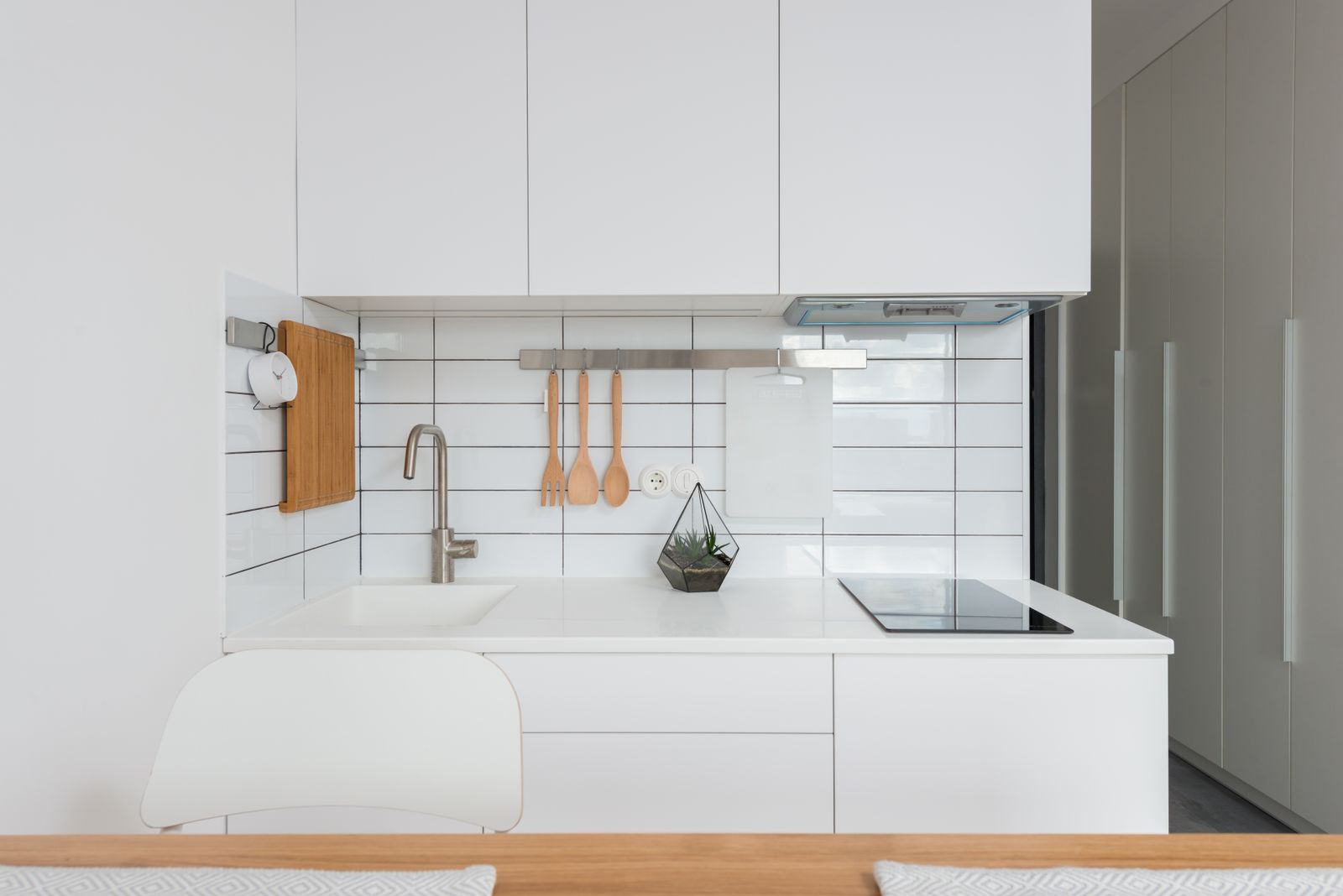
A backsplash is a small area where every mistake is at eye level. The difference between a good splashback and a poor one is almost never the tile. It is where the courses start, where the cuts land, and whether the outlets sit on a joint or in the middle of a tile.
We draw the set-out before we order. That drawing decides whether the vertical stack behind the range is centred on the burners, whether the last course at the wall cabinet is a full tile or a 14 mm sliver, and where the movement joint goes at the counter.
What is included
Everything below is in the price
If something is not listed here it is not assumed. Anything outside this list is quoted separately and in writing before it happens.
- Set-out drawing for each wall, showing course heights and cut positions
- Substrate check and backer board or waterproof membrane where needed
- Outlet and switch positions adjusted onto joints where the electrician can still move them
- Full-height treatment behind the range where the design calls for it
- Grout joint width and colour chosen against the tile, not from a chart
- Schluter or bullnose edge termination, or a returned mitre on thicker tile
- Silicone movement joint at the counter and internal corners
How it runs
3 stages
01
Set-out
Drawn to scale before ordering, so the tile quantity includes the real cut waste rather than a flat ten percent.
02
Prep
Substrate flattened. A backsplash on a wavy pre-war plaster wall will show every ripple in the grout line.
03
Set and grout
Two to three days, plus cure time before grouting and another day before silicone.
What moves the price
Where the money goes
- No sliver cuts at the visible ends of a run
- Outlets that land on grout joints rather than mid-tile
- Zellige, handmade and natural stone handled with the right adhesive and joint width
- Tile format
- A 2 in by 8 in handmade zellige takes about three times the labour of a 12 in porcelain.
- Pattern
- Herringbone and stack bond add cutting and set-out time.
- Full height
- Running to the underside of the wall cabinets is standard; running to the ceiling behind the range is more area and more cuts.
- Natural stone
- Marble and limestone need sealing before grouting, which adds a day.
Sample band: $2,400 to $9,800 for a typical splashback area. Sample figure for orientation, not a quote.
Behind a range with an open hood, usually yes: it reads deliberate and it is easier to clean. Elsewhere, stopping at the underside of the wall cabinets is the quieter answer.
Rectified porcelain takes a 1.5 mm to 2 mm joint. Handmade zellige needs 3 mm or more because no two tiles are the same size. Forcing a tight joint on a handmade tile is how splashbacks go wrong.
Occasionally, if it is flat, sound and the added thickness does not foul the outlets or the counter reveal. Usually it is cleaner to take it back to the substrate.
Related
Often part of the same job
Countertops and stone
Template, fabrication, seam planning and installation in quartz, granite, quartzite, porcelain and soapstone.
DetailFull kitchen remodel
Layout, cabinetry, stone, tile, lighting and floor, drawn and built as one job.
DetailKitchen flooring
Subfloor correction, the right underlayment, and transitions that do not become trip edges.
DetailWhere we stand
Book the survey and we will tell you whether this is the right service for your room.
If a cheaper service solves your problem, we will say so. We have talked more than one client out of a full remodel and into four days of refacing.