Engineered quartz
The default choice for a working family kitchen. Always use a trivet.
Specification
A short list, held deliberately short. Three cabinetry programmes, seven counter materials and four hardware finishes cover almost every brief, and we know exactly how each one behaves after five years.
Countertops
Heat, staining, seams, thickness and upkeep. Colour is the easy part and it is the part every showroom leads with. This is the part that decides whether you are happy in year five.
Scroll the table sideways for every column
| Material | Family | Heat | Stain | Seams | Thickness | Upkeep |
|---|---|---|---|---|---|---|
| Engineered quartz | Ground quartz in polymer resin | Poor. Resin scorches and can yellow above about 300 F | Excellent. Non-porous, no sealing | Seams take colour well and disappear in a movement-free pattern | 2 cm or 3 cm slab, 1-1/2 in mitred edge available | Soap and water. No sealer, ever. |
| Granite | Igneous natural stone | Excellent. A hot pan will not mark it | Good once sealed. Oil will darken an unsealed slab | Busy patterns hide seams well | 3 cm standard, 2 cm with a laminated edge | Impregnating sealer every 12 to 24 months |
| Marble | Metamorphic natural stone | Good. It will not scorch, but thermal shock can craze a polished face | Poor. Etches on contact with lemon, wine and vinegar | Veining must be matched across the seam, which limits where the seam can go | 3 cm, honed finish hides etching better than polished | Sealer plus acceptance that it will patina |
| Quartzite | Metamorphic natural stone | Excellent | Good once sealed. Harder than granite on the Mohs scale | Directional veining, so seam placement is drawn before fabrication | 3 cm, occasionally 2 cm on a mitre | Sealer every 12 to 24 months |
| Porcelain slab | Sintered ceramic | Excellent. Genuinely unbothered | Excellent. Zero porosity | Thin body, so the mitred edge and the seam need a skilled fabricator | 6 mm to 12 mm with a built-up mitred edge | None |
| Butcher block | Laminated hardwood | Poor. Scorches and can split | Fair. Oil finish absorbs, but it sands out | Joins are visible and part of the look | 1-1/2 in typical, 3 in for an island top | Mineral oil monthly for the first year, then quarterly |
| Soapstone | Talc-rich metamorphic stone | Excellent. Traditionally used for lab benches and wood stoves | Excellent. Non-porous and acid-proof | Seams can be tightened and oiled almost invisible | 3 cm | Mineral oil to even the darkening, or leave it to patina |
The default choice for a working family kitchen. Always use a trivet.
Ask to see the actual slab. Granite varies more between blocks than any other material here.
Beautiful on a baking counter, punishing next to a cooktop. We often mix it in as one run.
Marble looks with granite behaviour. Confirm it is true quartzite, not a soft dolomite sold as one.
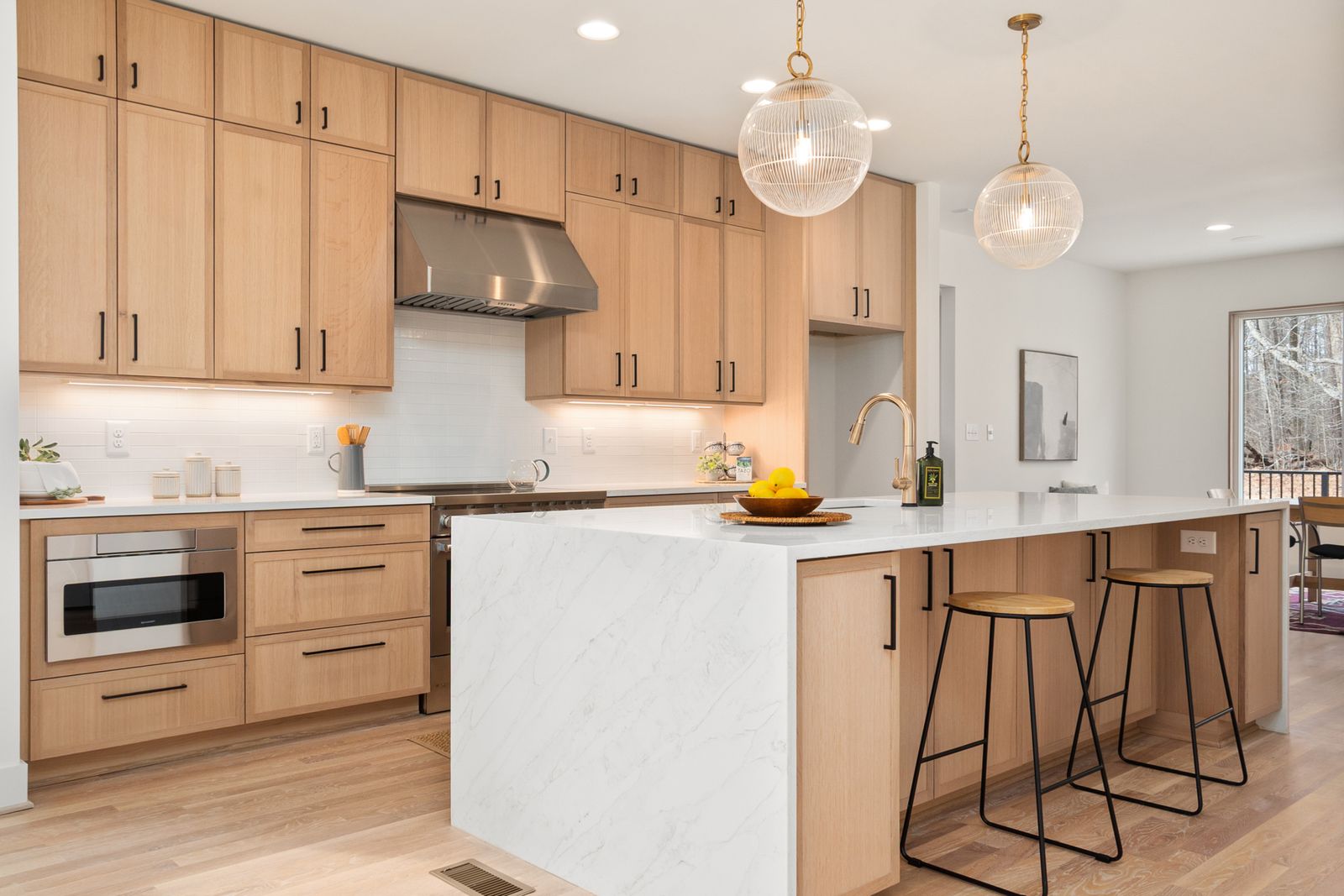
The right answer for a waterfall island that also takes the cooktop. Chipping at the edge is the risk.
Excellent as one prep run in an otherwise stone kitchen. Do not wrap it around a sink unless it is finished hard.
Soft enough to scratch and soft enough to sand the scratch out with 220 grit.
Cabinetry and hardware
Three programmes cover almost every brief. All three are available frameless; two are available as face frame with inset doors.
One finish per kitchen for pulls and knobs, with taps allowed to differ. Mixing three metals is the fastest way to make a calm kitchen look busy.
A rule we hold to
Pulls and knobs in a single finish throughout, and every light on the same colour temperature, 2700 K or 3000 K. Taps may differ from the cabinet hardware; nothing else does.
Three metals in one room and a 4000 K strip under the wall cabinets are the two things that most reliably make an expensive kitchen look unresolved, and both are free to avoid.
Where we stand
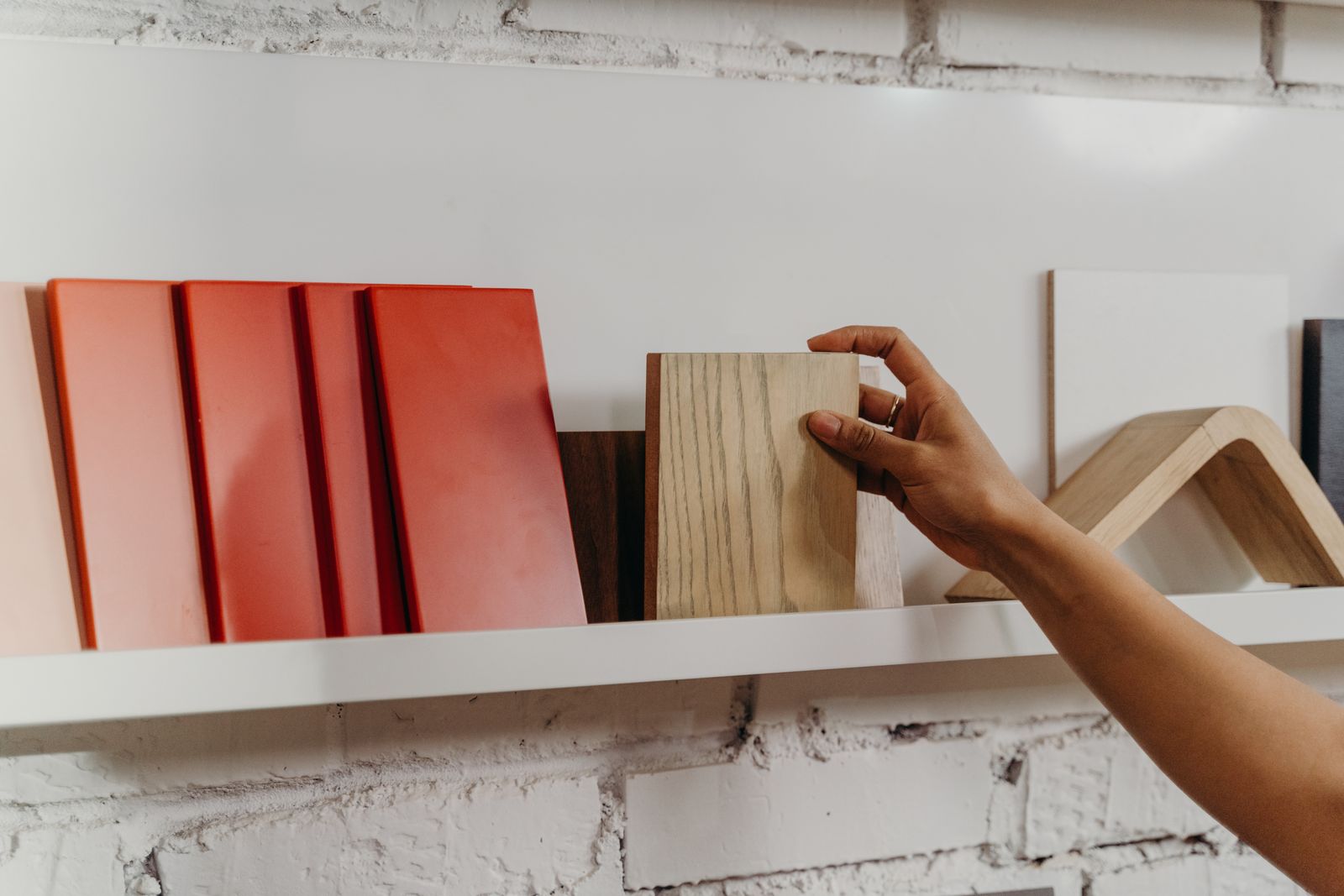
We bring samples to the second meeting, not the first, because the layout decides how much of each surface you need and where the seam has to go.
We value your privacy
We use cookies to run this site, remember your preferences and understand how it is used.Cookie policy